

Supply Chain
Sustainable Supply Chain Management
In the face of global economic shifts, climate events, and social challenges, a strong and agile supply chain is essential to preventing business disruptions. A resilient network not only protects our production capabilities and corporate reputation, but also safeguards the well-being of everyone connected to our business.
To proactively address these realities, we established the Responsible Supply Chain Management Guideline and the Supplier Sustainable Code of Conduct. These frameworks ensure that our partners operate responsibly, balancing economic growth with social and environmental stewardship. Our goal is to build a transparent, highly resilient business network that is ready for the challenges of today and tomorrow.
These policies serve as the foundation for continuous improvement, providing our suppliers with clear, practical steps they can seamlessly apply to their own operations. We are fully committed to turning these principles into action. By collaborating closely with our partners, we aim to drive mutual, long-term sustainable growth for everyone across our supply chain.
Responsible Supply Chain Management Guideline
1. Sustainable Supply Chain Management Framework
To effectively embed sustainability into our operations, we follow a straightforward, four-step framework. This ensures our approach remains focused, measurable, and transparent:
We establish a clear vision and objectives for our supply chain sustainability, anchored by a comprehensive Supplier Sustainable Code of Conduct that covers essential Environmental, Social, and Governance (ESG) practices.
We clearly define the scope of our supply chain management to ensure all critical operational areas and partnerships are thoroughly evaluated.
We identify our critical suppliers, paying close attention to those with potential sustainability risks. We then proactively communicate our expectations and engage with these partners to align our business practices.
We continuously track supplier performance against our established goals and transparently report our progress to the public and our stakeholders.
2. Responsible Supply Chain Management Process
- Business Criteria
- Sustainability Criteria (Environmental, Social, and Governance)
- Quality Criteria
- Pricing Criteria
- Delivery Criteria
- Sustainability Criteria
- Acknowledged and signed the Suppliers Sustainable Code of Conduct
- Business Criteria
- Sustainability Criteria (Environmental, Social, and Governance)
- every 3 years
- Quality Criteria
- Pricing Criteria
- Delivery Criteria
- Sustainability Criteria
- every year
- Provide supplier support in various areas, such as training and technological assistance.
- Monitor high-risk suppliers more closely
- Engage and collaborate with suppliers to build long-term partnerships that support continuous improvement and sustainable development
- every year
Sustainability Assessment Criteria
Sustainability is a fundamental factor in how we select and collaborate with our partners. For new suppliers, sustainability assessments are a core part of our selection process. For existing suppliers, we evaluate sustainability risks across our supply chain at least once every three years using the following methods:
- 1. Company-Conducted On-Site Risk Assessments
- 2. Supplier ESG Self-Assessments
- 3. Review of Supplementary Documents (e.g., recognized industry certifications)
Our sustainability risk evaluation comprehensively covers key factors across the Environmental, Social, and Governance (ESG) dimensions, focusing on the following critical areas:
Environmental
- GHG Emissions, Energy, and Air Quality
- Water and Wastewater Management
- Waste and Hazardous Materials Management
- Biodiversity and Deforestation
Social
- Human Rights and Labor Practices
- Occupational Health and Safety (OHS)
- Working Conditions and Fair Compensation
Governance
- Business Ethics and Anti-Corruption
- Data Security and Privacy
- Fair Competition and Intellectual Property Rights
Supplier Development
We are committed to supporting and enhancing our suppliers' capabilities through active engagement and collaboration. To ensure our products consistently meet the highest quality and safety standards, we work closely with our agricultural partners to maintain a reliable supply of high-quality raw materials. Our core, actionable development initiatives include:
- Elevating Standards and Policies: We actively communicate our company policies and expectations to our supply chain partners. We support them in implementing practical sustainable procurement policies to ensure alignment with our operational standards.
- Promoting Local Sourcing: We prioritize sourcing from local and domestic suppliers to stimulate the local economy, create jobs, and expand the market for eco-friendly products and sustainable agriculture.
- Capacity Building and Farm Engagement: We conduct regular meetings with our key agricultural suppliers, alongside on-site visits to farm plots and warehouses. During these engagements, we survey farming data and actively share knowledge focusing on safe chemical use and Good Agricultural Practices (GAP).
- Continuous Improvement and Traceability: We collaborate closely with our upstream suppliers to enhance supply chain traceability. Through these coordinated actions, we encourage and support our farmers in adopting GAP standards, enabling us to deliver safe, high-quality products while contributing to long-term value creation across our supply network.
High-Risk Supplier Management
High-risk suppliers are identified through a comprehensive evaluation process, which integrates business risk assessments, sustainability (ESG) risk evaluations, and ongoing performance reviews. To effectively manage and mitigate the risks associated with this group, we enforce the following targeted measures:
- Collaborative Mitigation: We engage directly with these partners to identify specific vulnerabilities and co-develop tailored risk mitigation strategies.
- Corrective Actions: We require high-risk suppliers to promptly implement corrective actions to resolve identified issues and improve their operational processes.
- Preventive Safeguards: We mandate that partners establish appropriate, proactive measures to minimize the likelihood of future disruptions or adverse impacts.
- Continuous Monitoring: We require these suppliers to conduct ongoing internal monitoring and regular self-assessments to ensure sustained compliance and continuous improvement.
Supplier Overview and Classification
Criteria used to identify critical suppliers include four aspects: volume of purchase, value of purchase, level of business dependency, and relevant quality and sustainability risks.
The following table shows the types and number of suppliers in each category for this reporting cycle.
| No. | Types | Number of Suppliers |
|---|---|---|
| 1 | Total suppliers | 167 |
| 2 | Tier 1 suppliers | 167 |
| 3 | Critical Tier 1 suppliers | 23 |
| 4 | Newly approved suppliers | 5 |
Key Performance on Supplier Management
| No. | Topics | Results |
|---|---|---|
| 1 | Number of suppliers assessed for sustainability (ESG) risks | 50 |
| 2 | Number of new suppliers assessed for sustainability (ESG) risks | 5 |
| 3 | Number of suppliers with identified sustainability (ESG) risks | 0 |
| 4 | Number of suppliers acknowledging the Supplier Code of Conduct | 167 |
Supplier Assessment & Risk Management
| Grades | Rating Definition | Management Approach |
|---|---|---|
| A | Excellent | Continue normal business as usual, with no additional intervention required |
| B | Good | Continue normal business, while monitoring and collaborating with the supplier to address any minor issues identified |
| C | Satisfactory | Implement a Corrective Action Plan (CAP) with guidance and support. Escalation measures may include: • Probation (1 year): If improvement is not achieved over 2 consecutive cycles, consider reducing order volume • Delisting (1.5 years): If improvement is not achieved over 3 consecutive cycles, the supplier may be removed from the Approved Supplier List |
| D | Needs Improvement | Suppliers with significant sustainability risks will be engaged for immediate corrective action, which may include suspension of purchases or removal from the Approved Supplier List if risks are not adequately addressed |
Supplier Engagement and Collaboration for Sustainable Growth
A resilient and sustainable supply chain is built on strong engagement and meaningful collaborations among all partners. Beyond our day-to-day operations, we place great importance on working closely with suppliers and farmers across the value chain to ensure we continue delivering safe, high-quality products from farm to table.
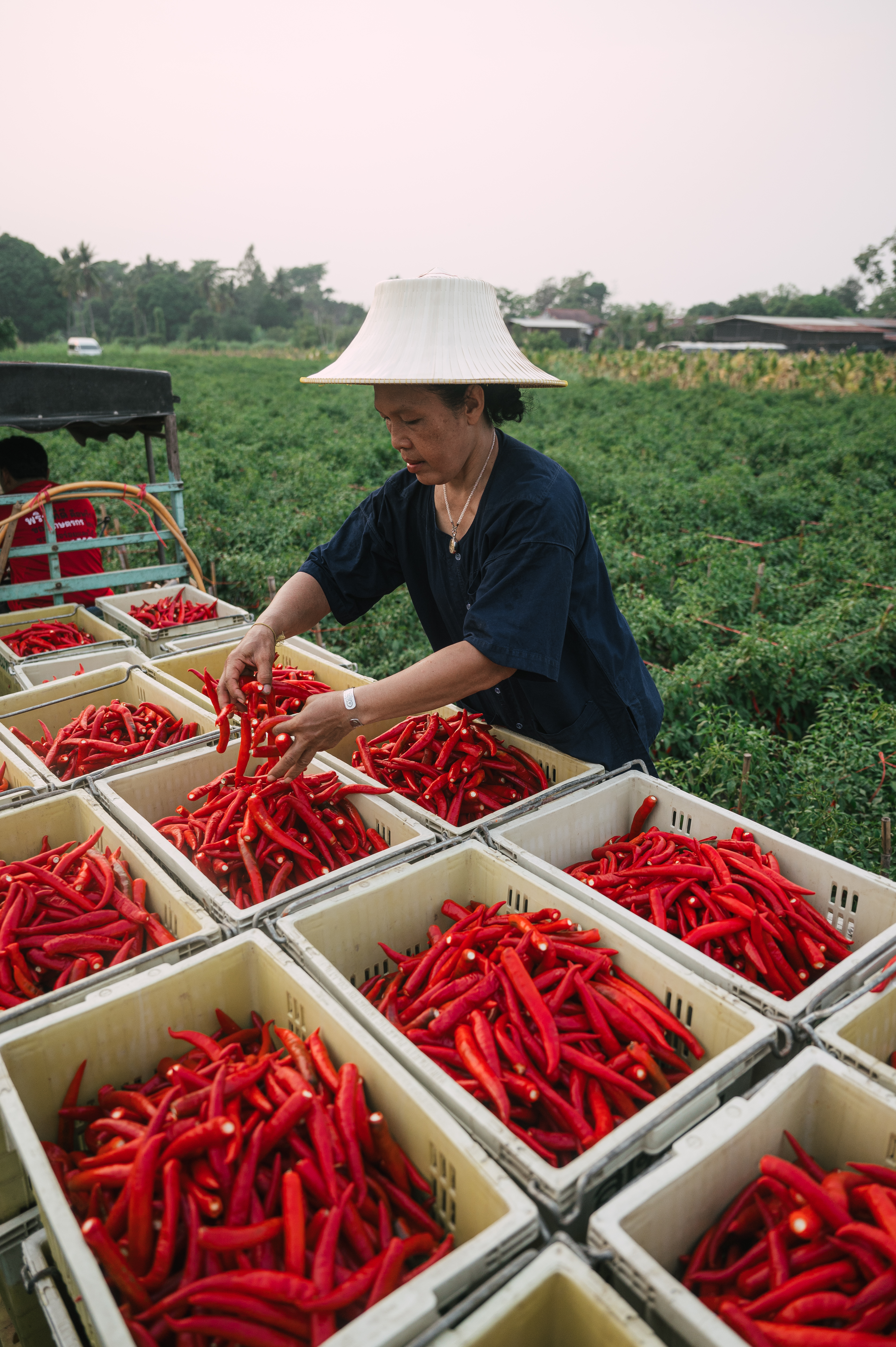
Throughout the year, we actively collaborated with our suppliers and farming communities to strengthen supply chain sustainability. Our efforts focused on promoting premium-quality raw materials in line with globally recognized standards, such as Good Agricultural Practice (GAP), while also supporting local chili farmers' livelihoods and fostering long-term, trust-based partnerships.
1. From Farm to Table: Advancing Chili Quality
To ensure that our chili meets the stringent requirements of European markets—which represent the vast majority of our sales—we work closely with chili suppliers and farmers to maintain a consistent supply of high-quality raw materials. Our collaboration focuses on knowledge-sharing on safe chemical use, communication of company policies and expectations, and regular farm visits. Through these coordinated actions, we support farmers in adopting Good Agricultural Practice (GAP) and improving the quality and safety of chili supplied to the company. This approach enables us to deliver safe, high-quality products while contributing to long-term value creation across our supply chain.
- Met with 100% of key chili suppliers
- Communicated the company's policies, expectations, and efforts focusing on chemical use and chili quality
- Visited chili farms and warehouses
- Surveyed and recorded data of GAP-certified and non-certified farms
- Shared knowledge on GAP
- Enhance traceability efforts in collaboration with chili suppliers
- Encourage and support Good Agricultural Practices (GAP) across the upstream supply chain
We initiated our efforts by holding a comprehensive supplier meeting with key chili suppliers and farmers to establish a shared framework for adopting Good Agricultural Practice (GAP). This engagement laid a strong groundwork for enhancing chili quality and safety to meet market requirements, serving as a solid foundation for our ongoing development plans.
During this alignment, we communicated three core elements: our sustainability policies, clear operational expectations, and joint development plans. This collaborative approach directly supports responsible farming practices while reinforcing long-term trust across our supply chain.
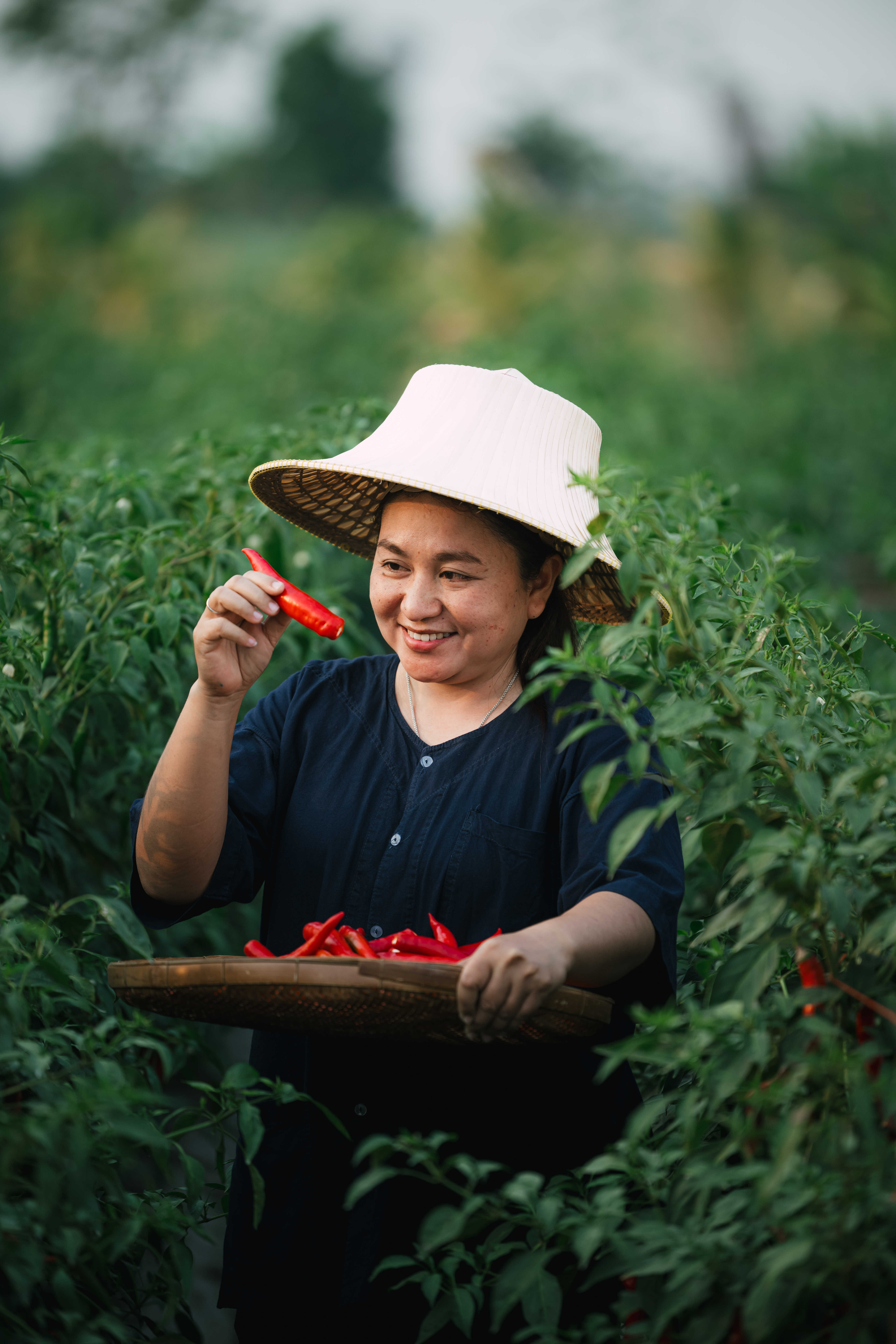
Building upon our initial stakeholder engagements, we conducted active chili farm visits throughout 2025 to gain direct insights into on-farm practices and strengthen our traceability efforts. This initiative was driven in close collaboration with key chili suppliers who aggregate produce from local farming communities. Their support provided us with direct access to farm plots, allowing us to deeply understand management practices right at the origin of our key raw materials.
During these on-site visits, we systematically mapped out farm locations, categorized farmer groups under each key supplier, and assessed the status of Good Agricultural Practice (GAP) certifications. These firsthand insights are instrumental in helping us design targeted, data-driven approaches to elevate local agricultural practice, ultimately ensuring a safe, consistent, and high-quality chili supply from farm to table.
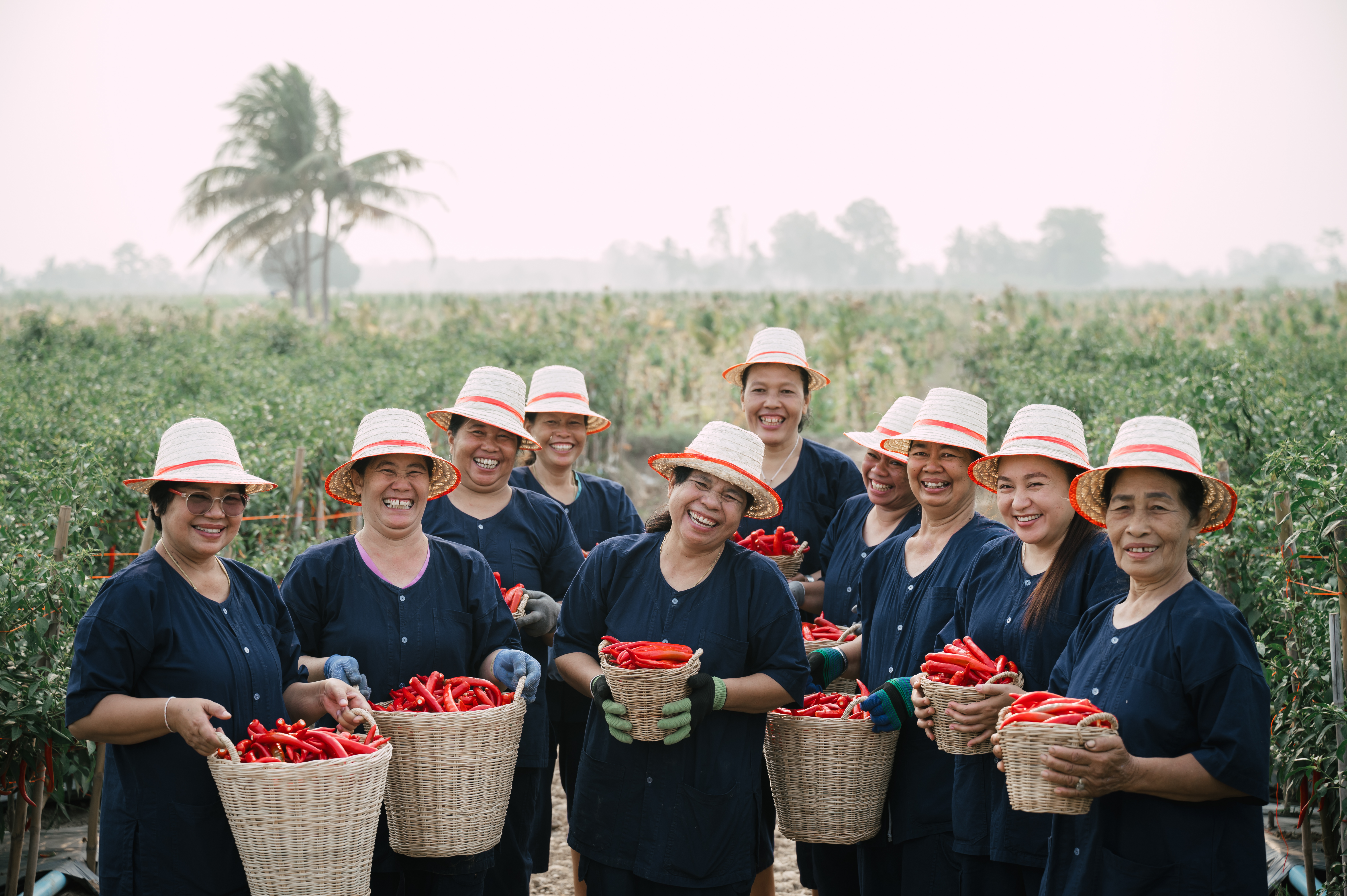
Capacity building for our suppliers and farmers is a core catalyst for embedding good agricultural practices and securing premium raw material quality. In 2025, our development programs focused intensely on the proper, safe, and responsible use of both biopesticides and chemical pesticides, protecting chili crops from two critical vulnerabilities: plant diseases and localized pests. Establishing these clear parameters and shared guidelines fosters continuous alignment and drives our targeted sustainability outcomes.
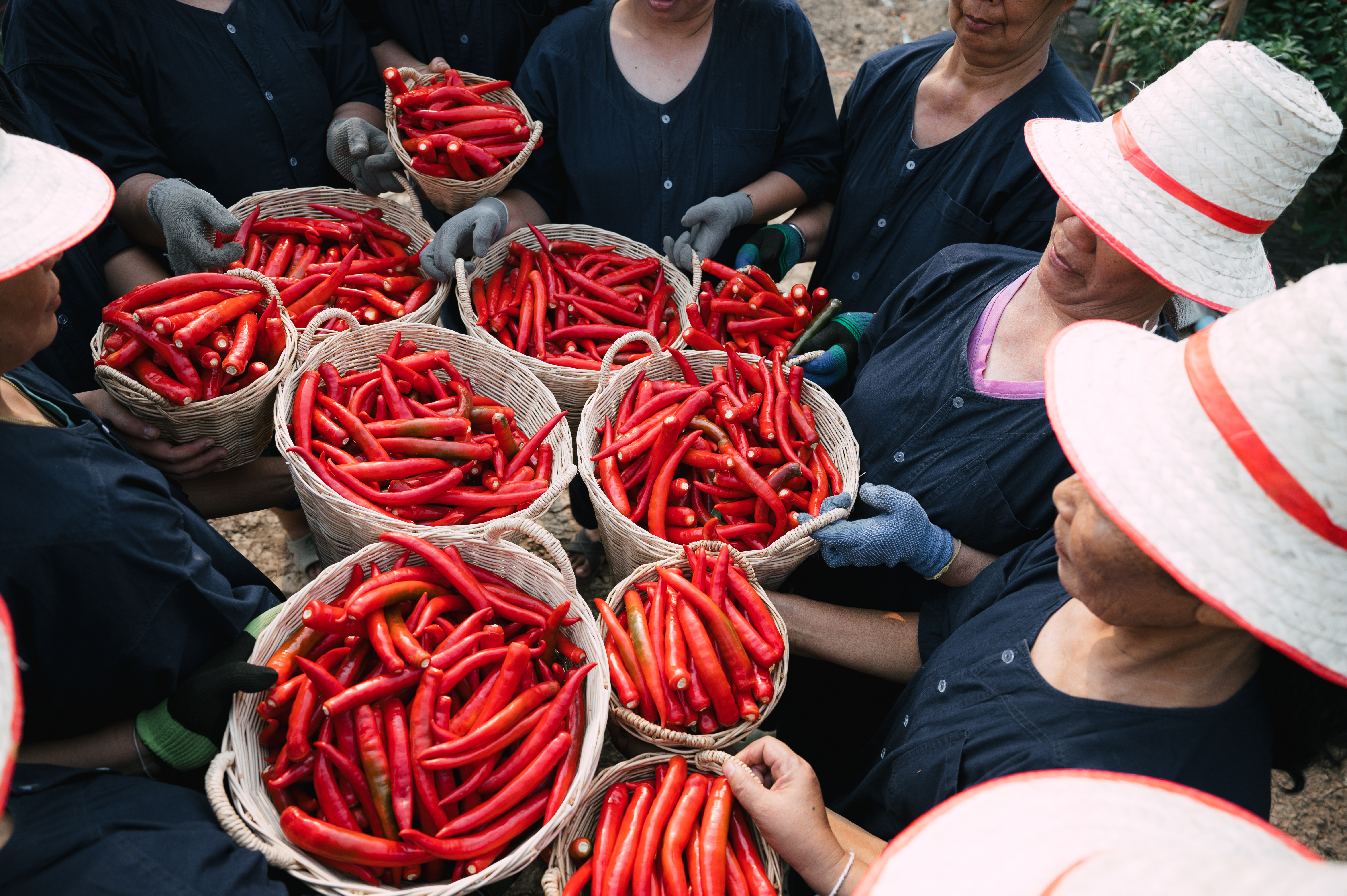
To maximize learning engagement and bridge knowledge gaps, we innovated a diverse suite of educational tools—ranging from professional presentation slides and practical manuals on EU-approved chemicals, to creative multimedia such as tailored songs and videos designed specifically to resonate with the farming communities. Through these highly engaging methods, we successfully conducted three 'XO Meets Farmers' sessions during this reporting cycle, empowering more than 70 local farmers with actionable knowledge for sustainable growth.
2. Empowering the Next Generation: Scholarships for Farmers' Children
The Company continuously supports education for both our internal and external stakeholders. Internally, we provide dedicated scholarships and educational assistance for employees and their families. Externally, extending beyond our standard corporate social responsibility (CSR) initiatives, we actively support the agricultural communities within our supply chain by offering meaningful educational opportunities to farmers' children.
In 2025, we proudly awarded undergraduate scholarships to two outstanding students from farming families, totaling THB 168,000. This contribution not only creates a lasting positive social impact by empowering the next generation, but also strengthens trust within our agricultural communities, helping build a more resilient and connected value chain.
3. Drip Irrigation System for Chili Farmers
To strengthen the resilience and efficiency of our agricultural supply chain, we advanced our drip irrigation initiative, which initially covered 100 rai in 2023 and expanded to 150 rai in Chiang Rai in 2024. This project has delivered a substantial impact, optimizing resource efficiency and increasing crop yields by up to 60% while supporting more sustainable chili production for our farming communities.
In 2025, we strategically paused the physical expansion to ensure the next phase delivers maximum long-term value. During this period, we focused on evaluating potential chili farming areas through extensive field surveys and rigorous laboratory testing of chilis delivered to our warehouses. This rigorous screening allowed us to identify dedicated partners capable of supplying residue-free chili that strictly meets stringent EU standards. This targeted approach reflects our unwavering commitment to responsible sourcing, quality assurance, and sustainable farmer partnerships.
With this stronger, quality-driven foundation now firmly in place, we are well-positioned to resume expansion into additional chili farming areas in 2026.