


CLIMATE CHANGE
Climate change presents a critical challenge to global businesses. To address this challenge, the Company is firmly committed to driving down our operational greenhouse gas emissions and accelerating the transition to clean energy. This commitment is deeply anchored in our overarching Environmental, Sustainability, and Carbon Neutrality policies.
To ensure the effective reduction of our emissions and achieve our targets of Carbon Neutrality by 2040 and Net Zero by 2050, we have established the Greenhouse Gas Management Committee. Led by senior executives, the committee is responsible for setting strategic policies, developing actionable decarbonization plans, and continuously tracking our environmental performance. Furthermore, the committee plays a vital role in identifying climate-related risks and opportunities; by leveraging actionable insights from our carbon inventory and other key environmental data, the committee works in close collaboration with the Risk Management Committee to support and integrate climate risk oversight into our broader corporate strategy.
Climate Change Governance Structure
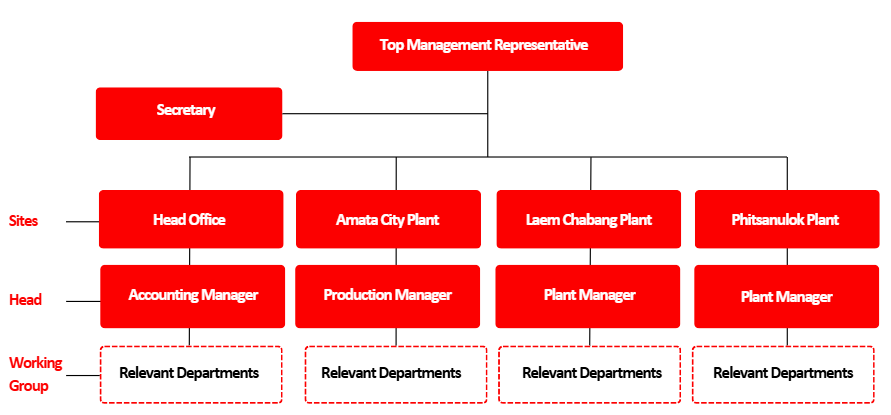
Duties of the Greenhouse Gas Management Committee
- Set meeting agendas, conduct all relevant activities, and maintain systematic records.
- Review and define targets, policies, strategies, and carbon neutrality management plans to ensure integration with Company operations.
- Communicate the importance of greenhouse gas reduction under the decarbonization pathway
- within the organization, across the value chain, and to stakeholders.
- Monitor and review implementation to ensure performance is consistent with targets.
- Periodically review and improve policies, plans, and indicators to align with the business context, current standards, and recommendations from verification and stakeholder engagement.
Continuous Improvement in Carbon Accounting
Our approach to tracking greenhouse gas emissions continues to steadily evolve. Building on a reliable foundation guided by TGO, we have adopted the ISO 14064-1:2018 standard. This transition allowed us to establish 2024 as our recalibrated base year, providing a clearer picture of our environmental footprint. We have also expanded our reporting boundaries—particularly within Scope 3—to encompass all four of our sites: our Headquarters, the Laem Chabang and Amata City production plants, and the Phitsanulok raw materials production facility.
Highlighting this steady progress, the Company proudly achieved the ISO 14068-1:2023 certification for Carbon Neutrality in early 2026. This milestone reinforces our commitment to strengthening operational resilience, proactively managing climate risks, and driving a measurable transition toward sustainable, low-carbon operations.
Strategy
Near-Term Strategies (2025-2030)
- Leak Detection and Repair (LDAR): LDAR measures to reduce the loss of refrigerants that have a high global warming potential (GWP) from cooling systems.
- Solar Rooftop: Install solar rooftop systems to increase the proportion of renewable energy within the organization and reduce reliance on grid electricity.
- Logistics EV Program: A program for Upstream-Inbound and Outbound logistics by transitioning to more EV transport vehicles, including the management of consolidated shipments to deliver goods simultaneously to reduce the number of transport trips.
Long -Term Strategies (2030-2050)
- 100% EV Internal Fleet: Transition 100% of internal factory vehicles to EVs to eliminate organizational fossil fuel use and directly reduce CO₂ emissions from internal transport and logistics.
- Zero-GWP Refrigerants: Transition all cooling systems to utilize Zero-GWP refrigerants to reduce high-GWP greenhouse gas emissions from cooling systems in production processes and warehouses.
- 100% Renewable Electricity by 2040: Achieve 100% renewable electricity utilization by 2040 to reduce indirect emissions from electricity consumption (Scope 2) to zero by 2040.
- Smart Grid & Battery Storage: Develop Smart Grid and Battery Storage systems for sustainable electricity management to enhance renewable energy stability and reduce energy losses.
- Upstream Logistics: Ensure 90% of suppliers have Net Zero targets and verified emission reductions, to reduce upstream supply chain GHG emissions and create a carbon-neutral value chain.
- Downstream Logistics: Collaborate with carbon-neutral logistics partners to achieve net-zero carbon emissions in downstream logistics.
- Green Procurement: Implement 100% sustainable and green procurement to expand the scope of sustainable purchasing to cover all raw material and service groups.
Target
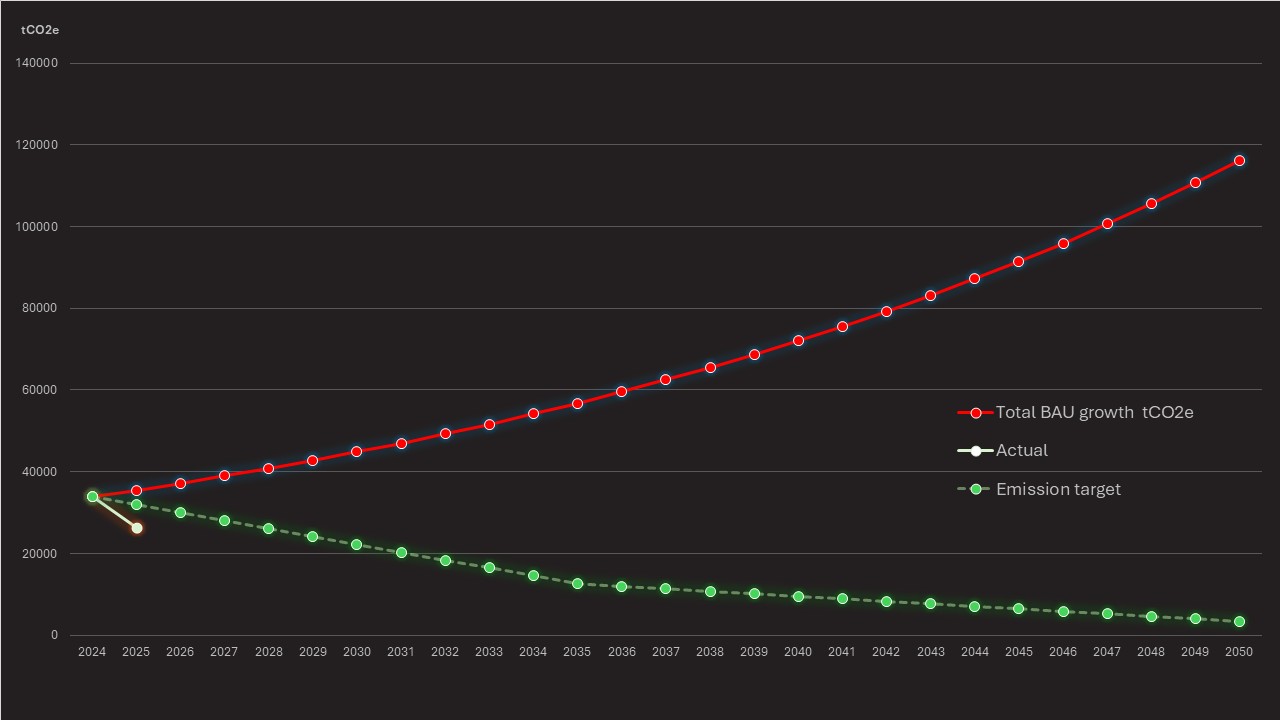
The Company has designated 2024 as the base year for its greenhouse gas reduction initiatives, stipulating the following targets for Scope 1, 2, and 3 emissions:
- Short-term Target (< 5 years): A 34% reduction from the base year by 2030.
- Long-term Targets (> 5 years): A 72% reduction from the base year by 2040 (Carbon Neutrality), and a 90% reduction from the base year by 2050 (Net Zero).
To ensure the successful realization of these set targets, the Company mandates continuous performance monitoring and comprehensive annual evaluations.
Carbon Neutrality and Net Zero Pathway
Result
| Scope | Unit | 2023 | Baseyear 2024 | 2025 |
|---|---|---|---|---|
| Scope 1 | tCO2e | 1,940 | 1,655 | 1,918 |
| Scope 2 | tCO2e | 2,215 | 2,530 | 2,138 |
| Scope 3 | tCO2e | 32 | 29,709 | 22,288 |
| Total GHG Emissions | tCO2e | 4,187 | 33,894 | 26,344 (-22%) |
Compared to our 2024 base year, our total greenhouse gas emissions have decreased by more than 22%. This significant reduction was primarily driven by the increased utilization of our solar rooftop installations, combined with natural fluctuations in our export shipment volumes during the year. Moving forward, we remain committed to implementing targeted management strategies to sustain this positive momentum and drive further efficiencies across all of our operations.
Climate-Related Risk Management
Through our standard Enterprise Risk Management (ERM) process, we have identified climate change as a factor that can directly influence our supply chain resilience and global competitiveness. To proactively manage these challenges, we monitor two primary climate-related risks that could potentially impact our operations:
| Physical Risk | ||
|---|---|---|
| Climate-related risks | Impact (Medium to Long Term) | |
| Acute / Chronic | Drought and Water Scarcity | Changes in climate patterns, particularly prolonged drought and water scarcity, can negatively impact agricultural yields. This poses a risk to the volume and consistent availability of key raw materials, most notably chili, which could affect our production capacity and our ability to fulfill customer demand. |
| Transition Risk | ||
| Climate-related risks | Impact (Short Term) | |
| Policy and Legal | Evolving Regulations and Carbon Pricing | Because our key markets are located in European and Western countries, we closely monitor emerging environmental regulations, such as the EU’s Carbon Border Adjustment Mechanism (CBAM) and potential carbon pricing frameworks. Adapting to these evolving international standards is essential to effectively managing future operational costs and maintaining our competitive advantage in global trade. |
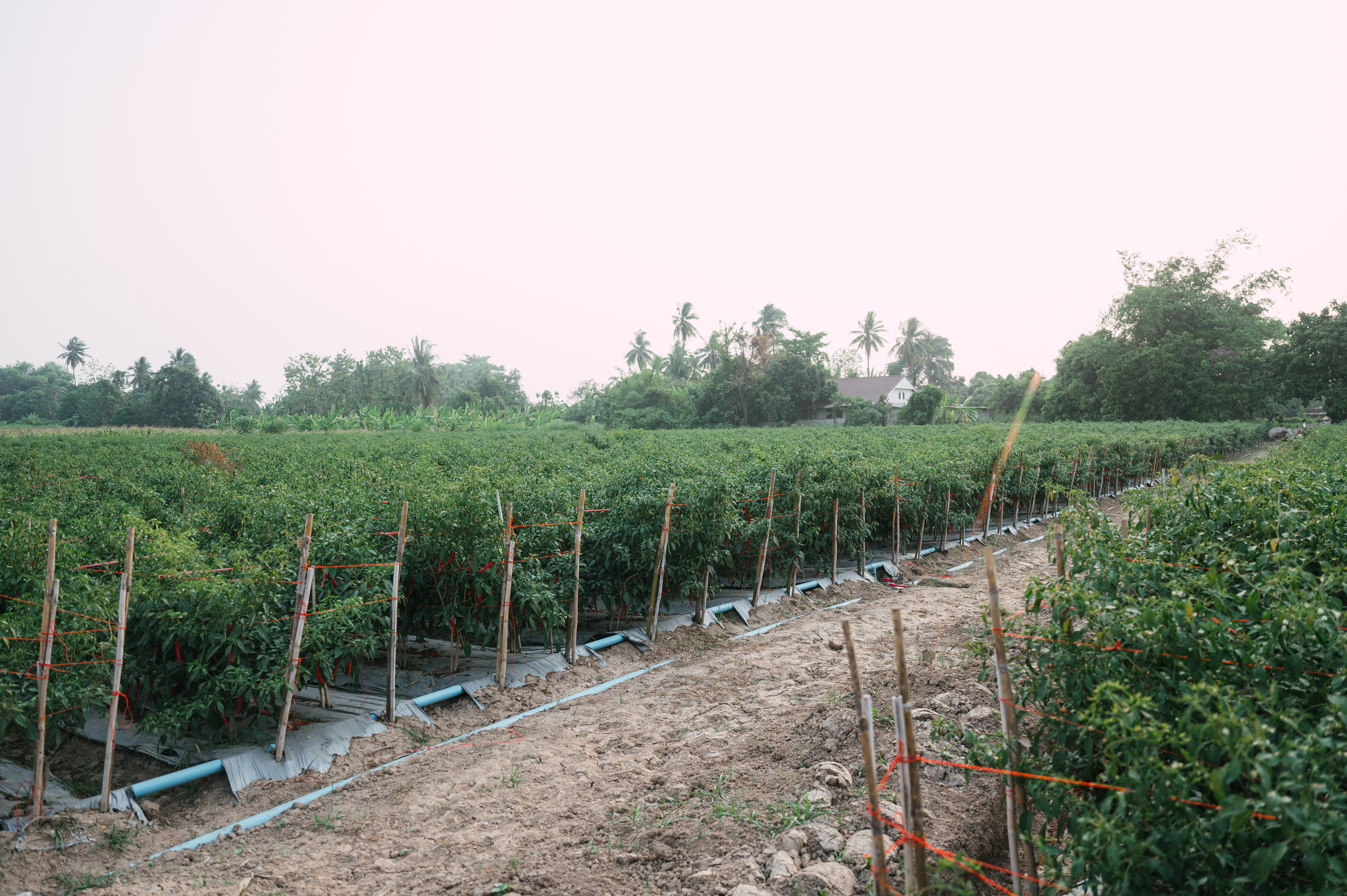
To mitigate these physical risks and adapt to changing climate realities, the Company has implemented a strategic Drip Irrigation System initiative for our agricultural network. This ongoing, long-term measure is designed to optimize water usage and has successfully increased crop yields per rai by up to 60%.
We continuously refine this initiative by strategically partnering with farmers who align with our rigorous quality standards and requirements. This collaborative approach ensures a stable, climate-resilient supply of raw materials for the Company, while simultaneously delivering mutual, long-term economic and sustainable benefits to our farming communities.